
For many years I’ve been looking at astrophotography images on the web and thinking I would love to get into that. But whenever I researched what was needed to get started, I found that the price, size/weight of the equipment and learning curve were a pretty large barrier to entry. So it remained a dream instead of another hobby on the pile.
Then this summer I came across a review of the Seestar S30 smart telescope, and all of that changed. The S30 is small (about the size of a large book), light, and easy to use. It connects to your phone for planning and preview. You just select the object you want to image from the library, and the scope orients itself and starts taking pictures. But the real secret sauce to the Seestar is its built in software for noise reduction and light pollution removal which means it can take great pictures of deep sky objects like nebulae and galaxies right from your backyard in the middle of light polluted cities like Portland.
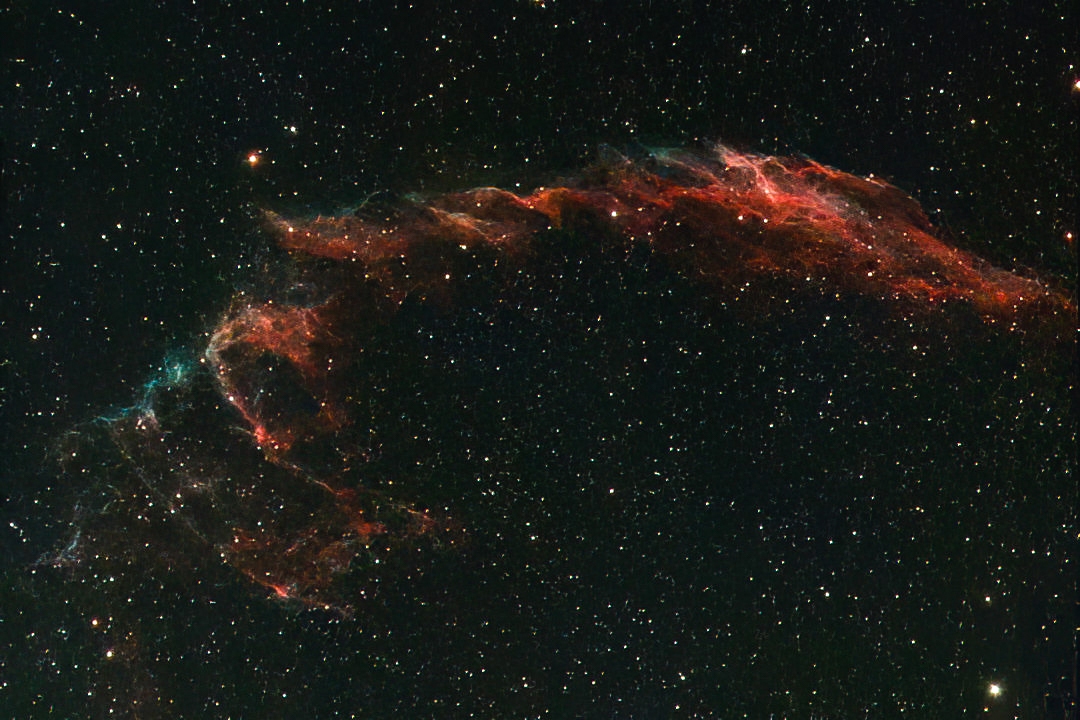
I played around with it a little bit over the summer and had some pretty good results, but quickly discovered there was no place in our yard with an unobstructed view of the sky. Between the house, garage and trees, the only clear sky was more or less straight up. If I could get the telescope up on top of the house, I figured it would have a much better view of the sky. I bought a telescoping pole, 3D printed a bracket which I attached to garage wall, and a disc that goes around the pole and secures it in the bracket. That system worked great and I had a mostly unobstructed view of the sky. The Seestar worked just advertised: I tell it what I want to image, run it up the pole, and let it do its thing all night. The next day I pull it down, and viola! I have great images of nebula and galaxies.
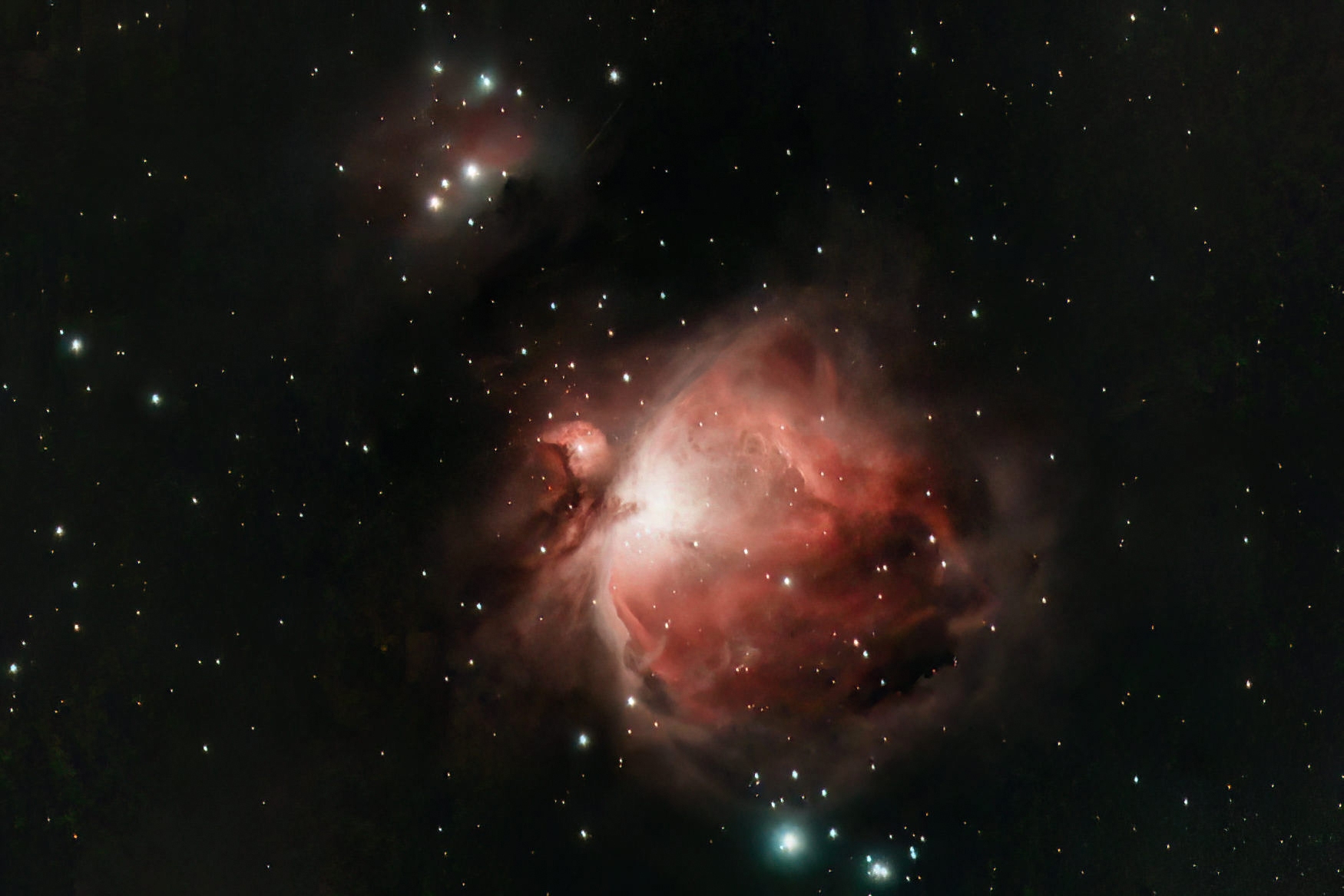
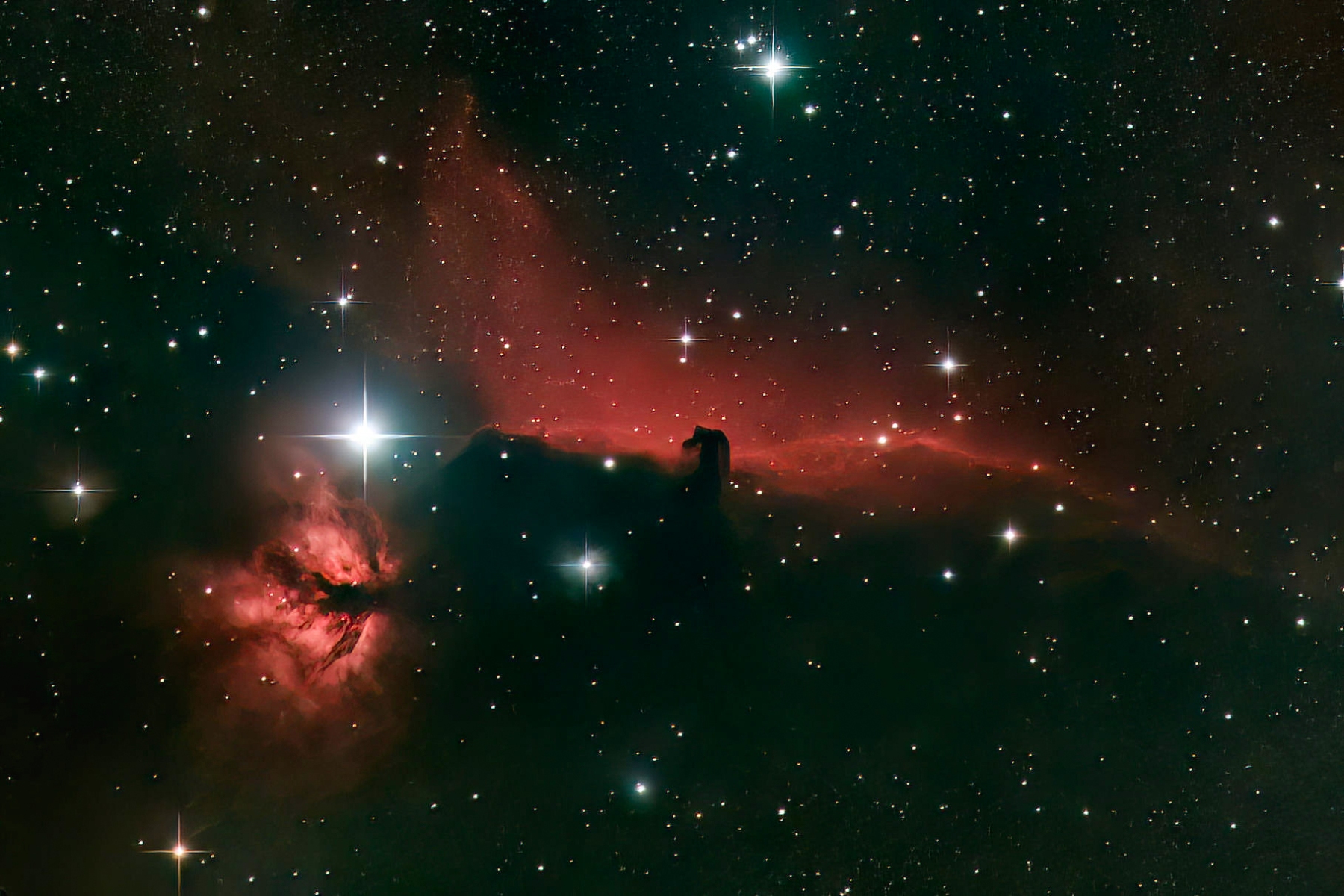
My two favorite nebula that I really wanted to image most are the Horsehead Nebula and Orion Nebula, both of which are only visible in PDX during the winter. This last week we had clear skies for a few nights, so I set the S30 up and let it go. As you can see above, the images it got are pretty darned good.
These two were stacked automatically within the scope itself, and then lightly edited in Photoshop and Topaz DeNoise to adjust the levels and noise. I think they both turned out really great! You can get a little more detail out of the images if I stack them myself using some specialized software, but I’m really, really happy with these.
I’m sure there will be more images from deep space later in the coming months, but in the mean time I hope you like these. You can see all of my other astro pics in my gallery on Astrobin.